


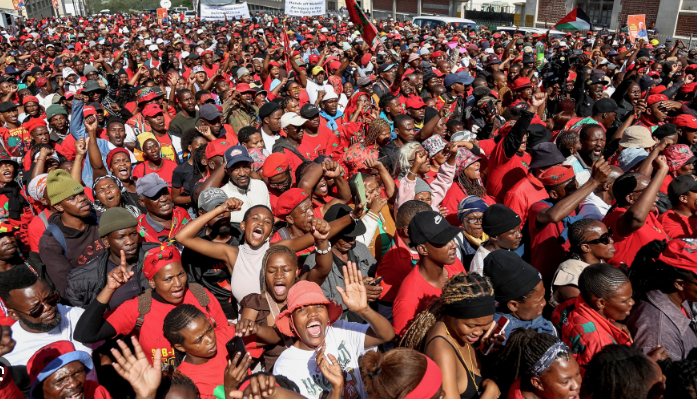
Justice must not only be done but must be seen to be done equally. Without consistency, even well-intentioned enforcement can be viewed as uneven
The firearm case involving EFF President Julius Malema has a potential of leaving the system vulnerable to doubt rather than strengthening its credibility.
From the public’s perspective, this is where the real concern lies. People are not only looking at what the law says, but how it is applied in everyday life. While the justice system may be moving to show that it takes the firing of a firearm in public seriously, the lived experience on the ground often tells a different story. In many communities, the sound of gunshots at funerals or gatherings is not unusual. What raises eyebrows is that these incidents sometimes happen in the presence of law enforcement, yet no visible action follows.
This creates a difficult question: if the law is clear, why does its application seem selective? When a high-profile case is handled firmly and publicly, it may appear as a strong stance on crime. But when similar behaviour in other settings goes unaddressed, it begins to feel like the law is not being applied with equal eyes.
The result is a growing sense of uncertainty. The public is left wondering whether justice is consistent or conditional. While the intention may be to reinforce accountability, the perception of selective enforcement risks doing the opposite. Instead of strengthening trust, it may quietly erode it, leaving behind a system that appears strong in principle, but uneven in practice.sed diam voluptua.







Leave a Reply