


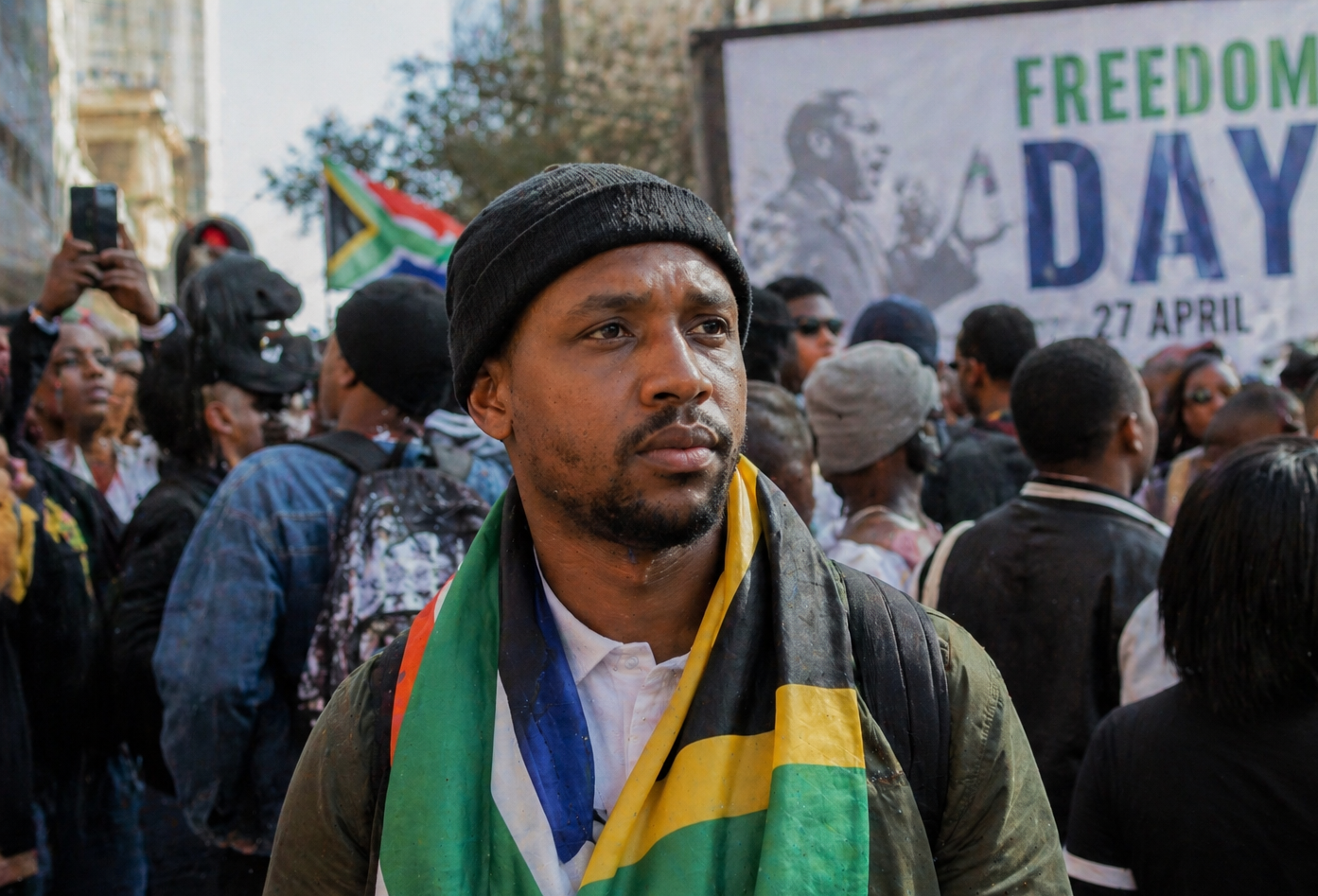
For a 32 year old South African, born around the time Nelson Mandela led the country into democracy, Freedom Day can feel both historic and unfinished.
The promises of 1994 remain powerful, yet many citizens measure freedom not only by rights on paper, but by whether those rights work in real life.
The right to vote was one of the greatest victories of liberation. Yet analysts note that public trust in elections is damaged whenever people believe there is manipulation, irregularities, or weak accountability. Even when institutions defend the system, doubt alone can weaken democracy. Freedom requires confidence that every vote counts. Electoral analysts from the Electoral Institute for Sustainable Democracy in Africa (EISA) have often stressed that trust is the foundation of democratic participation.
Equality before the law was another cornerstone of Mandela’s vision. But many South Africans say justice often depends on money. Wealthy individuals and corporations can afford top legal teams, while ordinary citizens struggle with costs, delays, and complex procedures. The Socio Economic Rights Institute (SERI) and Legal Resources Centre have repeatedly highlighted that access to justice remains unequal when poverty blocks the courtroom door.
Education was meant to break apartheid barriers. Today, schools are open to all races, but quality remains deeply unequal. Many township and rural schools face overcrowding, poor resources, and weak outcomes, while top institutions often remain expensive and highly competitive. Education researchers at Stellenbosch University and Equal Education have described this as freedom of access, but not always freedom of opportunity.
Jobs and careers were once racially restricted. Now opportunities are legally open, yet unemployment remains one of South Africa’s deepest crises. Many graduates, even those with advanced degrees, struggle to find work. Economists from Statistics South Africa and the OECD have frequently argued that political freedom without economic inclusion creates frustration.
Freedom of speech exists constitutionally, but many citizens say speaking out can bring backlash, isolation, or professional consequences. Public figures such as whistleblowers, investigative journalists, and outspoken officials have often faced intimidation after exposing wrongdoing. Media freedom organisations like SANEF and Amnesty International have raised concern over threats against truth tellers.
The right to own property or start a business also exists, but small entrepreneurs frequently cite bureaucracy, funding barriers, crime, and red tape. Analysts from the World Bank Doing Business reports and Business Unity South Africa have long argued that formal freedom to trade means little if practical barriers remain high.
Still, one success is visible. South Africans of different races learn together, work together, and live under one democratic order. Mandela’s dream opened the door. The challenge of this generation is to make freedom practical, fair, and economically meaningful for all.


Leave a Reply